Starting out with a silly pun (“I don’t know, I’ll ask her”) is probably not the best form to use when writing an online blog, but hey, it’s my blog, and I’ll write the way I like!
Which is a less-than-clever way to introduce my latest missive: My vacation trip to Alaska.
I’m not sure how I came across the cruise deal, or what prompted me to look into it in the first place, but since Alaska was the only state I have never visited, I was interested for that reason if nothing else.
So, on March 29, I booked a stateroom, made flight reservations, and sat back and watched the days on the calendar pass.
I could make this post a lot longer, but I won’t go into the travel issues, so on June 12 I stepped aboard the MS Coral Princess, one of the Princess Cruise Lines ships. My first pleasant surprise was the stateroom. I think my package awarded me an automatic upgrade, so I found myself in a mini-suite, complete with separate seating area, large porthole/window and two TVs!
Caribe Deck (10) Forward 201
For the next week, the ship cruised the “inside passage” making ports of call at Ketchikan, Juneau and Skagway, followed by leisurely rounds of Glacier Bay and College Fjord, finally arriving at Whittier, Alaska. Along the way I visited Creek Street in Ketchikan, the Mendenhall Glacier near Juneau, rode the White Pass & Yukon Route railroad in Skagway (coupled with a bus trip to the Yukon Territory for lunch and photo ops) and roamed the decks as the ship navigated the glacial waters.
Smith (left) and Harvard (right) Glaciers in College Fjord
All in all, it was a very enjoyable trip. The food was great (and I gave myself permission to “cheat” — but still avoided sugary foods, breads, and the worst of the dietary “bombs”), the service was great, friendly and prompt, the weather was terrific (given it was Alaska, so a jacket was handy) and the scenery delightful.
Oddly enough, and I don’t mean this in a negative way, now that I’ve been to Alaska, I have no desire to return. It’s a big world, and there are other places I’d like to see!
The God of the Universe apparently doesn’t want me to have a new mp3 player.
I rarely get upset about things, but this is one of those times when I’ve just about reached my limit.
I’ve been around long enough to see technology replace technology. Remember floppy disks? From 5-14″ to 3-1/2″ to CDs to DVDs and now to “cloud.”
As the late Paul Harvey used to say, “Not all that we call progress truly is.”
When I first started running a few decades ago, I liked to listen to music while outside, giving me some relief and distraction from the sometimes-boring miles I was putting down. Believe it or not, I started with a Sony Walkman, a cassette player, strapped around my waist in a neoprene holder, earbud cable poking out of the back. When the cassette gave way to CD-ROM, I tried those, but the bouncing of the running movement made it impossible to track music smoothly. Then came mp3s.
Technically, mp3 is a shortened form of MPEG-3, the Motion Picture Experts Group standard (3) for coding digital audio (see: https://en.wikipedia.org/wiki/MP3 ). It has become the ubiquitous format for audio files. Pretty much everywhere (there are other formats, but they aren’t the subject of this post). A whole new industry took off, with pocket-sized devices designed to store and play audio files. “Mp3 players” they were called.
Fast-forward (you can read my previous post if you want more background on my experience). The state of mp3 players is nothing short of an unmitigated disaster, in my opinion.
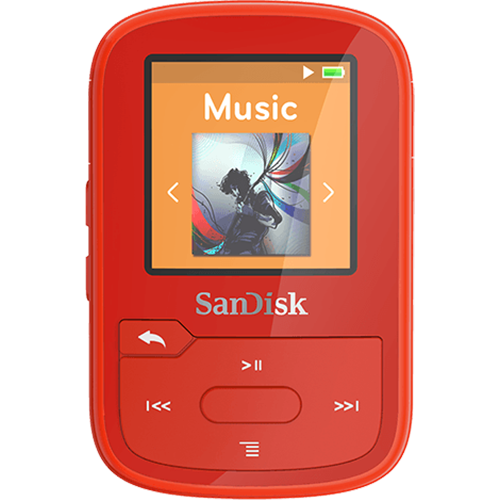
I am about to return the third — yes, third — mp3 player I bought to replace an iPod that finally gave up the ghost. All three were manufactured by different vendors (although they’re Chinese, so maybe not). This last one, a SanDisk Clip Sport Plus, I thought was going to be the winner. Each device I’ve bought has cost a bit more. The SanDisk tipped the scales at $50. And I didn’t buy it through Amazon. 16GB of storage, Bluetooth, and FM radio. All of the features I wanted in a portable music player. And I’ve been quite satisfied with other SanDisk products I’ve bought!
For the third time, I waited for delivery, then removed it from its shipping container, plugged it in to charge it, and then plugged it into my computer.
Nothing.
Well, even though the box and SanDisk’s web site claim it’s compatible with macOS X 10.3 and higher, I’m always a bit skeptical. However, I have two Macs, and neither would see the device, I decided to take it to work and plug it into a Windows PC.
That’s when it all went south. No device recognized there, either. Sigh.
I’ve sent an email to SanDisk and to Adorama, where I purchased it. SanDisk says they will “get back to me,” and Adorama says they’ll contact me regarding a return. This is where Amazon shines — they’ll take an item back without question. Yes, it’s going back.
And this is really the last time I’m trying this. I have an iPhone, I have an Apple Watch, and I have several iPod Shuffles. Neither the watch nor the Shuffles will hold 16GB, but I’m just going to have to play “swap the files” when I want to update the music on them.
I’m so disappointed in the state of manufacturing these days. I think the time of carrying a portable music player are going the way of the Dodo.
Amazon‘s growth has been nothing short of spectacular. From its starting days as an online bookseller to the mega-behemoth it’s become today, Amazon is now everywhere. Trucks sporting the “Prime” logo are everywhere on the streets. Whole Foods is now an Amazon subsidiary, and Prime members supposedly get discounts others don’t (disclaimer: I’m a Prime member and I shop at Whole Foods. Whether I get a discount or not, I haven’t checked). The web site Woot! is now an Amazon subsidiary (so why shop at Woot! anymore?). Everywhere you turn these days, it seems Amazon’s got its fingers (tentacles?) in the pie.
Unfortunately, such unparalleled growth has its darker side, and for me, this comes in the form of “junk” products being sold on the site. It didn’t seem necessary to issue a warning — caveat emptor! — when shopping on Amazon as it did when shopping on eBay. Interestingly enough, eBay has become much more reliable and safe, whereas Amazon has gone the other way.
Several recent experiences are the basis for this post. The last was simply frustrating, disappointing, a waste of time, and a loss of confidence in Amazon’s offerings and policies. (For the record, Amazon is great when it comes to returning products. If it weren’t, I’d be long gone from ever shopping there again!)
My iPod died. Well, one of my iPods died. The one I clip onto the back of my running shorts. When I exercise, I don’t want to be carrying a phone or a device that’s as large as a brick. Just give me my music, and let the technology get out of the way!
Apple now only offers the iPod Touch, an iPhone-sized brick that’s loaded with features, but short on compactness. I have a phone; I don’t need another brick to carry with me.
Well, I don’t HAVE to have an Apple product, right? Any compact mp3 player should do. Or so I thought.
I searched Google. I tried a number of values, including “compact,” “bluetooth,” Every result presented me with Amazon results. Egads, are these two in cahoots? Sigh. Off I went to Amazon.
After searching a bit, I found something made in China by a company called KLANGTOP (seriously? Seriously!). 8GB capacity with clip, FM radio and Bluetooth. $29.99, with 199 customer reviews and a 4/5 star rating. Sounds ideal, right?
Well, not so fast. The product arrived, and when I pulled it from the box, I felt like the packing material was of better quality than the device it held!
I charged it up, and went about setting it up. First, none of my computers would recognize the device. Worse yet, its Bluetooth wouldn’t recognize any of the bluetooth speakers I have.
Back in the box it went, and off to the UPS store to return it.
So, I decided to find a better quality device. I found an “Amazon Choice” Soulcker (pronounced “soul seeker”) D16. Included arm band, earphones, USB cable and a 4.5/5 rating based on 279 customer reviews. It arrived, and I went through the same setup process. This time, with a little coaxing, I managed to get some music on it, and even got it to recognize a Bluetooth receiver. A promising start.
Not so fast there, buck-o! After finding the controls less-than-intuitive, I felt I would grow to learn them. After all, it was (relatively) inexpensive — can’t have everything, y’know?
Except that, when I went to add more music, the soul-killer absolutely refused to detect any computer it was connected to. I changed computers, I changed cables, I changed computers and cables. No joy.
I printed out another return label. I don’t feel I have to “live with” a device whose main purpose in life seems to be wanting to be a target downrange for a .45cal round!
Which brings me to the “Amazon trust” issue. There are reports of massive “fake reviews” appearing on Amazon. The company itself says it polices items and reviews, but now every Tom-Dick-and-Harry can be an Amazon “affiliate,” how can these sellers be monitored?
Say what you will — Apple seems to have mastered the ability to manufacture quality products in China. The rest of the world? Well, it appears on Amazon as crap, it seems.
I first created this site in 1995 as a way to learn the concepts of this new medium called The Internet. What started as a way to self-teach myself HTML quickly became a way to store my favorite hyperlinks for quick and easy access. Of course, those links were to music sites and musicians, primarily. One day, the snowball affect occurred, and I started getting requests to have links added to my site. For a short while, this site was on the Google landing page when “new age music” was the search term. The dormant site still exists at the base URL, but I haven’t updated it in what, twelve years?!
My interest in music has never waned, and neither has my interest in things technological, so I simply transformed this site into a personal journal — a web log, or “blog” as the term has come into being..
Nowadays, there isn’t as much need to keep bookmarks of record companies, radio stations, artists and streaming audio sites, as those can be found by using one of the many search engine sites (Google, Bing, DuckDuckGo, etc.). That doesn’t mean I don’t still have interest. I do! And that’s the reason for this post..
Some time in 2005 I came across a new offering. Something called “podcasts” had been introduced by Apple in their iTunes product, which made it possible for Mac users to subscribe to broadcasts, have them downloaded to their computer, and listened to at one’s leisure. One of those podcasts was hosted by a Dutchman who called himself “TC” (or, as I came later to find out: // TC //). The music was an astounding blend of mixes from artists whose names I had never heard before! I was hooked!
Enter Spacemusic.nl
For a number of years, TC podcasted under the title of his domain: spacemusic.nl (a full history of his early days is available through the link). Somewhere, on one of my computers or drives I have most of them still intact! Some of the older podcasts may still be available through iTunes, as well.
The podcasts ended after nine seasons. There was “radio silence” for a number of years, and then TC announced the arrival of “The Ambient Zone.” An extension of spacemusic.nl, the new shows featured all-new content, and offered a subscriber option, that let paid listeners download the programs (in several formats) for independent play.
The first means to do so was through the horrid (my opinion) Patreon site. Despite my reluctance, I signed up to pay TC for his shows. I like them that much! Earlier this year, TC embarked on creating his own member site, and The Ambient Zone was launched. I signed up as a premium member!
TC has moved to Cyprus, quit his job so he can be a full-time podcaster, and continues to present fresh, tonal peace for those like me who love listening. I realize few people come across this blog, but I’d like to support TC and The Ambient Zone by spreading the word. So, give it a try:
As long as I can remember, I’ve cruised through life with radio or music in my ears whenever the time and opportunity allowed it. As a child, I was in the forefront of the “transistor” era, where advances in electronics technology made miniaturization possible. I went from having a radio with a handle on it tucked into the newspaper bag I carried on my delivery route, to a pocket-sized device with a tiny speaker and (usually) a single, wired earpiece. We didn’t call them “buds” back then.
The single earpiece gave way to the stereo earpieces, and that technology has pretty well persisted to today. Equipment, on the other hand, has continued to evolve. The cassette tape made carrying prerecorded music around with you a reality. The compact disc (CD) was a boon to record-scratchers everywhere, but its playback mechanism (a laser light on a movable arm over a spinning platter) made it susceptible to jostling, so it didn’t work well for runners and exercise enthusiasts.
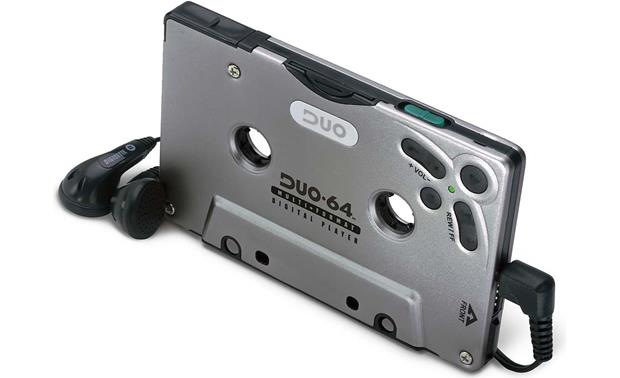
Computer technology brought to life sound files, such as mp3, wav, ogg, FLAC, and so on. This birthed the mp3 player industry. I owned a variety of music players, including the nifty, but confusing Digisette Duo, an mp3 player shaped like to cassette that could be played through tape machines as well as via the now-ubiquitous earphones.
Apple shook up the music industry when it introduced its iPod in 2001. I didn’t buy an original, but when Apple shipped the “2nd generation,” I became one of the converts.
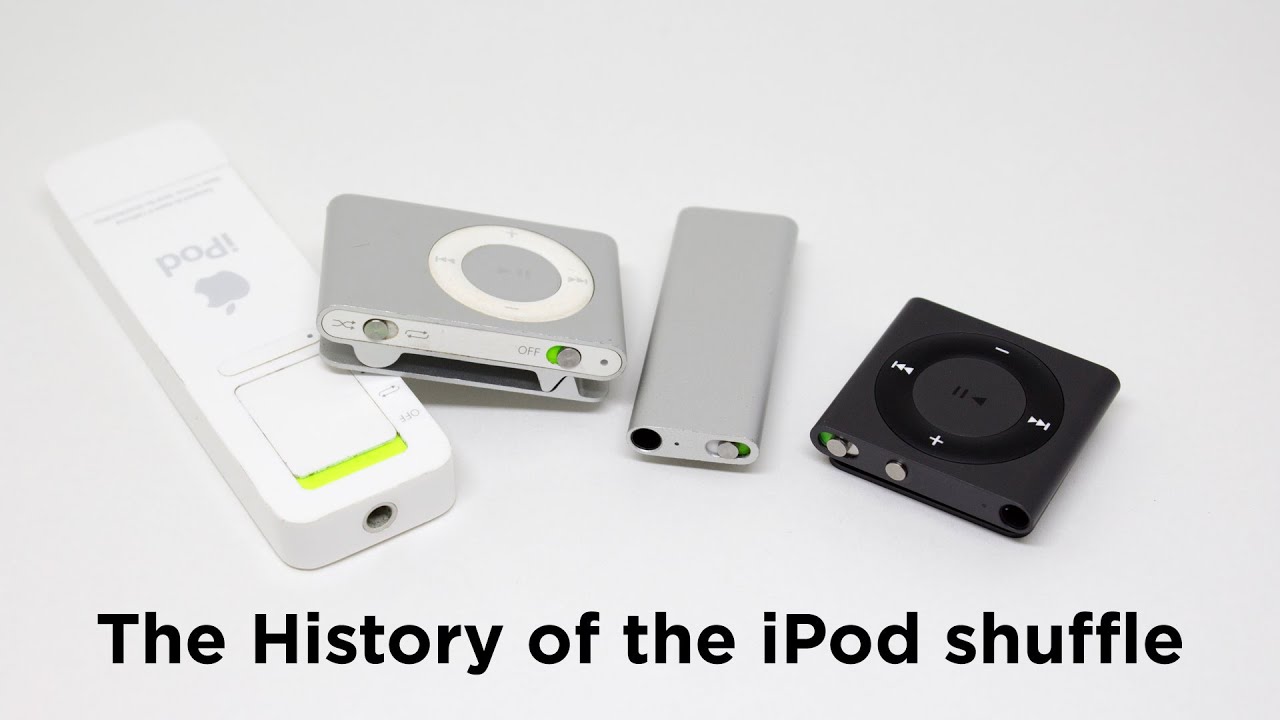
Miniaturization continued, and Apple gave us the iPod Shuffle (in numerous incarnations), the Nano, the Touch, and so on. I particularly liked the Shuffle, even the one that received media brickbats.
Earpiece technology also improved, but not as radically, and not as fast. Only recently has wireless Bluetooth made to earphones, eliminating the need to plug the sound “emitters” into the sound producer. Apple own Airpods are now everywhere, recognizable by the “handles” that jut from the wearer’s ears.
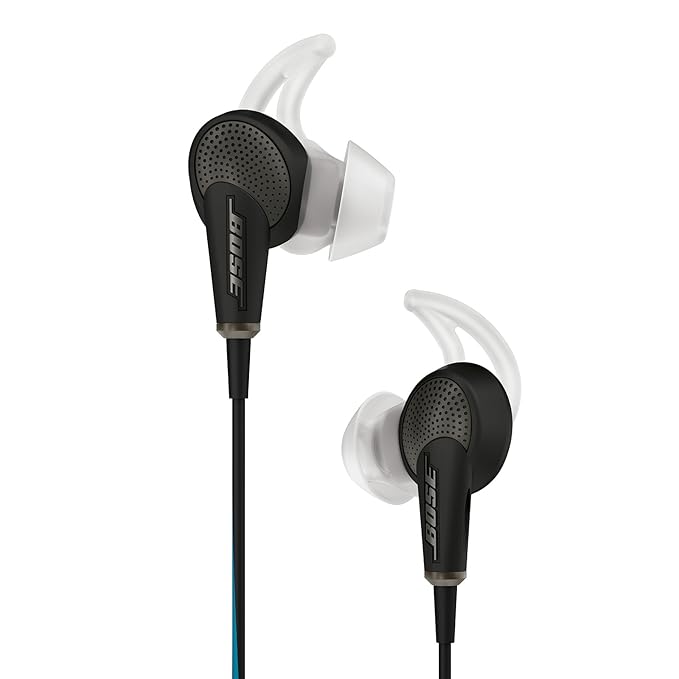
Perhaps I’m out of step. Or perhaps I’m just not “woke” enough to enjoy the current state of the art. By this, I mean that I haven’t yet found a pair of Bluetooth ear buds that suit me. For the record, I have thoroughly enjoyed my wired earphones. The Bose QC (QuietComfort) 20 noise-cancelling earphones have been a boon for air travel.
The YurBuds Ironman earbuds have lived up to their guarantee: they do not fall out, even during the most strenuous exercise
However, I have yet to find a pair of Bluetooth earbuds I like. I bought a pair of crowdfunded “air by crazybaby” in-ear, totally wireless earbuds. Oh, did I want to love these buds! They fit perfectly, and the absence of even a connecting wire was so nice–they fit well, and were all but invisible. The only problem was, they didn’t work. Battery life was pathetic, and the right earbud would simply die a few minutes after heading out the door.
I threw them into the trash last night
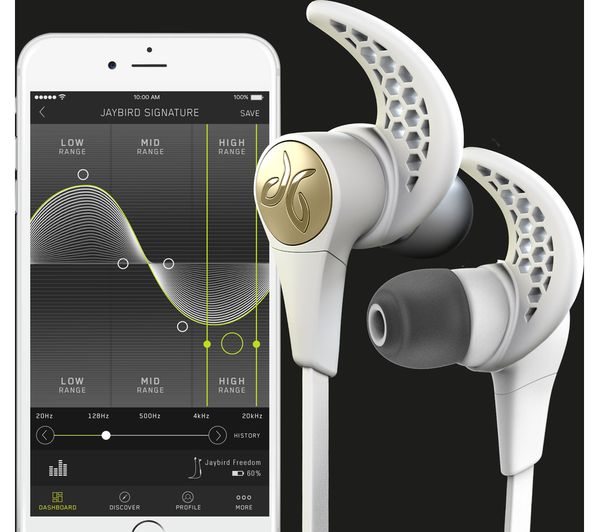
I have a pair of Jaybird X3 wireless earbuds, but their quirky design makes them uncomfortable to wear.
Finally, I broke down and purchased a pair of Apple Airpods 2. These are perhaps the best I’ve had so far, but they aren’t perfect. The left Airpod always seems ready to slip out of my ear, even though it doesn’t. They are the easiest to pair with any device, and the sound is good, although not exceptional.
I’m getting closer to getting a pair of Bluetooth earbuds I like, but now the player device is becoming an issue. My iPod Nano just died, and Apple no longer makes a compact mp3 player. It seems the only small, portable clip-on players are cheap products from no-name companies in China that break the moment you remove them from the box.. I shipped such a device back to Amazon yesterday after only 15 minutes of trying to get it to recognize any of my Bluetooth earbuds. Sigh.
Over the past several weeks I have been feeling like a ping-pong ball, bouncing back and forth between opposing viewpoints.
No, this is not a post about politics, although the same case for the same could be made: Two diametrically opposed points of view; each professing to be “right” and the “only way.”
When I was first diagnosed with Type 2 Diabetes (T2D), I knew precious little about the disease. Oh, I knew it had deadly consequences, and that it had to do with excessive sugar in one’s blood, but that’s about all I knew.
Life isn’t as simple as that, and neither is the human body. I found Understanding Type 2 Diabetes, a fact-filled web site written in a quirky manner by a man who, like me, had found himself diagnosed with no understanding of the meaning of that diagnosis. I have been reading it (and other sites) copiously, and my understanding of diabetes has grown enormously. Ken Stephens (the author of Understanding…) got me to thinking, and I had previously been drawn to the work of Joel Fuhrman, MD., so I began to explore. I joined a private Facebook group based on the writings of Dr. Jason Fung, and hints from Stephens.
So, I started following the diet regimen there, which consisted of eating a low carbohydrate, high-fat diet, excluding processed foods, added sugars, and “white food” (pastas, rices, breads, etc.). I thoroughly enjoyed having bacon and eggs for breakfast, although it saddened me a little to think I couldn’t eat fruits and some of the more “comfortable” foods. This is, essentially, a keto (short for “ketogenic”) diet.
Then came a webinar I joined, from a Fuhrman reference, I think. Here were two actual diabetics talking about reversing insulin resistance through eating whole, plant-based foods. They offered a year-long program and guaranteed that it would work. Well, I wasn’t born yesterday, so my belief in Internet guarantees is that they’re worth the paper they’re written on, but I made a decision: Here was a structured program, guaranteed to improve my diabetes condition. This was no time to play cheap with my health, so I took the plunge.
The program is called Mastering Diabetes (MD), and its co-hosts are Cyrus Khambatta, Ph.D. and Robby Barbaro. Theirs is an online course, Internet webinars, a private Facebook group, and lots of helpful printouts and tips.
But Mastering Diabetes is all about high carbohydrates and low fats. The similarities are the expulsion of “processed” foods, sugars, and “empty” white foods. Another similarity is that both Fung’s philosophy and this is the concept of intermittent fasting.
I’m on my second week of MD. I haven’t fasted on this plan yet, but I did several times on the “keto” diet. Water and green tea were all I needed to get me 18-20 hours of fasting.
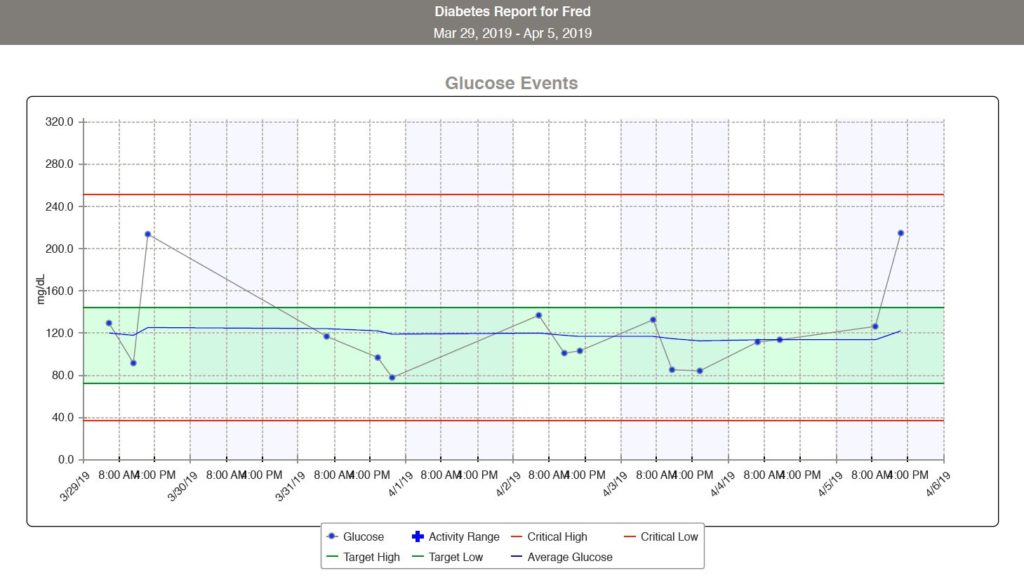
What I’ve discovered in this short amount of time is that both programs have worked to lower my blood sugar. All of my readings for the past four days have been in the “green” zone (80-140 mg/dL (4.5-7.8 mmoL). This pleases me to no end, but I want to improve to the lower end still.
Mastering Diabetes gets my nod because their focus is less on the level of glucose in the blood, than on insulin resistance, and the causes behind it. High blood sugar is like the fever exhibited when one has an infection. You can either treat the fever or treat the infection. I choose to treat the infection!
Now, I may be a bit premature and/or presumptuous, but here’s my initial take on both programs: They both work. Maybe it isn’t so much in the details, but their similarities strike the right chord: Get rid of junk food, processed food, and sugars (hidden and otherwise), and things tend to straighten out. The epidemic of diabetes is such because too many people have taken the “easy” way, and eat junk food, fast food, and boxed food. I’ve gotten back to using my kitchen (which I actually enjoy) and I’m already healthier as a result!
The past month has been one long read-and-research experience. Along with my learning about diabetes, I’ve been undertaking dietary and fitness changes in an effort to reverse the diagnosis. Considering I feel great, it’s hard sometimes to realize that I’m now dealing with a life-threatening condition that affects every part of my body.
Information on reversing Type 2 diabetes seems to be everywhere, and there’s a lot of agreement (except on the part of the established medical community, ironically) that it can be done. It’s the “how” that differs from viewpoint to viewpoint.
Most superficial descriptions of diabetes rely on the translation of the term, “diabetes mellitis,” which means in essence, “sugar urine.” In other words, too much sugar in the blood.
It now seems to me, based on my reading, that high blood sugar is a symptom of diabetes. The underlying cause is insulin. Lack of it (Type 1) or too much of it (Type 2). Even that is a bit of an oversimplification. But consider: if you are running a fever, do you treat the fever or the underlying cause of it? This is to me, the heart of the matter.
My doctor hypothesized I might be “insulin resistant.” This term could be taken one of two ways: either the cells that are to receive the glucose the insulin is trying to deliver to them are refusing it, or there is simply too much insulin in the system. Either way, the high blood sugar is the result of insulin trying to “force” glucose into cells that are already filled with it, thereby refusing it. Dr. Jason Fung has a great analogy for this in his book, The Diabetes Code.
The Diabetes Code, by Dr. Jason Fung
Well, my self-treatment has been going very well. At least peripherally. I discarded all the processed foods in my pantry, eschewed all “white” foods (potatoes, pasta, breads, sugar, etc.) and went more and more to a Keto diet, with intermittent fasting. In four weeks my blood glucose readings have been trending down (the two outlyers are post-pho lunch. Sadly, it looks like I need to eliminate that from my diet.
But, as I mentioned earlier, blood glucose is only part of the story. It’s possible to have a good blood sugar reading and still have insulin resistance.
And that’s when I decided to get serious.
Last night I watched a webinar. As with most “snake oil” presentations, I was very skeptical. But it was compelling, and a 100% guarantee was offered. I went to investigate further today, and saw another webinar was scheduled to start in just moments. So, I pulled out some earbuds, plugged in, and spent another 90 minutes watching and learning.
Much of what was presented was in line with what I’d already read and learned. I decided that since I was getting a modest tax refund (and more importantly — this is my LIFE I’m talking about), I’d spring for a year-long program.
I am now a member of Mastering Diabetes, an online coaching, teaching and support system. It’s a structured approach, and the results are promised to be evident almost immediately. I’ve seen dramatic improvement doing it myself for four weeks, so I think a systemic approach may be even better. Stay tuned…
Just to show I’m not single-tracking on one topic, I felt it necessary to post about last night’s concert.
Robin Trower is one of those musicians that often go unnoticed by the “trendy” masses. That’s too bad, because the man has produced over 40 albums and compilations in the 50+ years he’s been in the music business. From 1967 to 1971, Trower played for the band Procol Harum, which had recorded the hit “Whiter Shade of Pale” before he joined.
Striking out on his own, Trower formed his own self-titled band and began releasing albums. 1975’s Bridge of Sighs introduced the world to Trower’s Hendrix-like guitar stylings, and his mark on the music business was made. Still, he’s flown under the radar to the general public for the most part.
But he opened his 2019 tour at the Birchmere in Alexandria, Virginia on April 2, 2019 to a sold-out crowd.
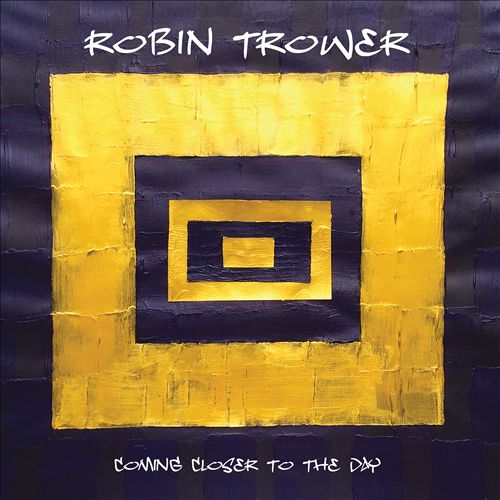
As this was the first stop on his tour, a number of songs from his latest album, “Coming Closer to the Day” were played publicly for the first time. This is the entire setlist, thanks to setlist.fm:
Too Rolling Stoned
Diving Bell (live debut)
The Fool And Me
Ghosts (live debut)
Somebody Calling
Day of The Eagle (segue to)
Bridge of Sighs
Truth Or Lies (live debut)
Confessin’ Midnight
Daydream
Tide of Confusion (live debut)
Little Bit Of Sympathy
Encore(s)
Rise Up Like The Sun
For Earth Below
While I haven’t heard the new album in its entirety (four of the tracks he played in their live debut), I’d say Trower is still on his game, producing outstanding, Fender Stratocaster-fueled dynamite!
The diagnosis of Type 2 Diabetes causes — as might be expected — a plethora of confusion, questioning, uncertainty and fear. Life isn’t a bed of roses, and so being confronted with a new challenge, the first thing I do is start trying to understand what it is I’m being confronted by.
One good thing about traveling is the time it affords one to read; nothing makes an airplane ride go by faster than a good read. Same with bus trips. Both of which I have had in abundance lately.
So, I’ve bought and borrowed from the library, a number of books, which I think deserve some recognition. The first is “The Diabetes Code,” by Jason Fung, MD., a book the site Diet Doctor says, “should change the world.” Subtitled, “Prevent and Reverse Type 2 Diabetes Naturally,” the book is a wealth of medical information and practical advice.
I’ve also been reading the articles on understandingtype2diabetes.com, a free web site written by a Ken Stephens, who isn’t selling anything, and actually seems to minimize his personal identity on the site. Stephens writes he was diagnosed as Type 2 (sometimes abbreviated as T2D) and his site is the result of his own research. I confess, I like a lot of what he writes.
In fact, all of the sources listed above all have in common the same basic idea: Diabetes is an epidemic and that it is mostly caused by lifestyle choices that sometimes we aren’t even aware of.
Truthfully, I first found myself in this camp during my running years. I still have linked to George Mataljan’s World’s Healthiest Foods site, and I own several books by Joel Fuhrman, MD., who to me is the “godfather” of the “eating healthy” movement.
The upshot of the above is, to me, evidence of a growing awareness into the problem — and solution — to the ever-increasing number of people who have been diagnosed (or will be diagnosed) as diabetic. The main medical community seems reluctant to rethink the carbohydrate-heavy diet promulgated by the government and the big sugar and corn interests, when all around them the evidence is right in front of their faces.
I started this post, thinking it was just going to be a touch point, a brief update. But it’s gotten longer that I thought, so I’ll end it here.
This diabetes thing is going to turn me into a grumpy old man.
Even though I currently feel no differently than I did before I was diagnosed, I’ve been prescribed medication that I must take twice a day, and remembering to do so — especially with the schedule I keep — has proven problematic. And the only way I have to track my improvement is to take a blood glucose reading three times a day, every other day.
This has been the infuriating part of this new life. The Certified Diabetes Educator (CDE) gave me a kit containing an Accu-Chek reader, a lancet device and some reader strips.
My doctor sent in a prescription for additional lancets and strips, which I got after a small bit of confusion and mix-up. I’m not entirely sure why I needed (or need) a prescription, as these all seem to be over-the-counter products. My problem is that every time I try to test my blood, the device tells me that the blood drop is too small and to try with a new strip. I have wasted more strips this way than actually getting readings. After three finger-pricks, I’ve had it, and put the stuff away. It also costs me in used lancets.
This isn’t the way to manage this disease. I know. I have tossed all my white foods (pastas, sugar, rice, bread, potatoes) and am trying to maintain a healthy diet. It’s pretty easy for me to do that at home, but when I travel on business, as I am currently, it becomes quite a challenge.
Today, my first day on a five-day business trip, I skipped breakfast due to an early flight, and then when I arrived, had to find a restaurant that served healthy cooking. I was fortunate, as when I asked my server if I could have a double portion of vegetables in place of mashed potatoes, she was kind enough to offer me a soup and salad in place, so I stayed as low-carb as possible. At dinner, I opted for (another) bowl of soup and a dozen chicken wings. Again, not ideal, but as low-carb as I could make it.
Somehow, I’ve got to overcome this glucose metering issue. I’m likely going to have to keep testing myself, and I have to find the solution to doing so quickly, easily, and accurately.